Thursday, 5 September 2013

The Sunday Drive and the App

Does anyone still go on a Sunday drive? The 1970's, I suppose, was the last time it was commonly done. People would set out with no set purpose or aim, heading up the coast, then motor back to town.

The car itself was so engrossing, so interesting, so innately sexy, that time spent in its company required no further reward.

To most of us, that now seems nutty. The point is to get somewhere!

Young people in particular have fallen out of love with the car. They would rather travel on public transport and check their iPhone/Smartphone, the item that's replaced the car as an expression of freedom and adulthood.

There's a battle being waged over those digital devices, some argue the apocalypse is upon us: parents, themselves distracted by their devices, have allowed a generation of young people to rewire their own brains.

This, of course, brings hoots of derision from those who argue that humanity has always embraced new technology and become richer and wiser for it.

The history of the car - and of that Sunday drive - might be a good place to start.

When cars came on the scene there was great anxiety. The technology was seen as alarming and dangerous; drivers were required to hire a man to walk ahead of the vehicle waving a red flag.

In retrospect this seems absurd, yet this was followed by a period that, to our eyes, now appears equally absurd: a time in which the new technology was embraced with such abandon, with such uncritical glee, that it was allowed to remake the world in its own image.

Cars were fun and liberating - that's why we fell for them with such a swoon - yet they also poisoned our lungs, chewed up our countryside and brought foreign wars to secure fuel.

We were unwilling to put any limit on a device so intriguing, so liberating. Adding a seatbelt was a battle that took years. Lead was left in the petrol because the engine seemed to like it.

Most of us look back at that period with bewilderment. We now believe the car should be tamed so it suits our wider needs: seatbelts, emission limits, a better balance between spending on road and rail.

Which brings us back to those digital devices. We are midway, it seems to me, along a road we have already travelled. As with the car, we started with outright anxiety - the red-flag period - then entered a period in which the technology became dominant, as if it were setting its own rules.

This, for many households, is where we are now. Kids and adults sit, dotted around the house, all using different devices, skipping from app to app, for hours at a time.

This is not done to get anywhere, to achieve anything; it's for the pleasure of time spent with the device.

Remember that Sunday drive?

The spaghetti junctions of LA still represent the worst of the motor car and its unfettered dominance. Will the rewired spaghetti of our brains come to represent a similar period of uncritical embrace?

No sensible person believes we can take a hammer to all new technology. True, we couldn't eradicate those mechanised looms, but they could be bent to better suit human needs.

Maybe we now need some push-back of our own. If nothing else, someone needs to say the obvious: if you wanted to produce a machine for creating social anxiety, particularly in teenagers, you'd probably come up with something that looked exactly like Facebook.

When parents demand children put down their devices, or when they make a deal with themselves to take a digital holiday, they are not being Luddites. They are merely getting ahead of an inevitable wave - one in which we will all understand that this technology, like all those that preceded it, must be bent to our needs.

"Every time I see an adult on a bicycle, I no longer despair for the future of the human race."
~~H.G. Wells

"Never drive faster than your guardian angel can fly."
~~Author Unknown


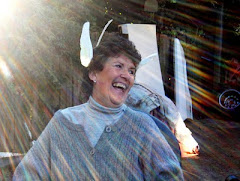
This is me at the family home in 1974 in my Sprite


Love this photo!


Saturday, 20 April 2013

Pay It Forward Day

Thursday April 25, 2013 - Pay It Forward Day

Please join me on Thursday and let's create a ripple effect that will last all year.....until 2014 when we can do it all again.......like Ground Hog Day!

Pay it Forward Day has now spread to more than 50 countries around the world. It's mission is simple - together we can change the world - one good deed at a time.

One good deed might not seem like much, but if everyone did something good for someone else then the cycle of generosity and kindness can spark us to become better people.

Operating on the premise that we all have it in our power to help another, one individual truly can change the world.

A day of giving....how great is that! And kindness is contagious!


"They say don’t believe your own hype, but if you don’t why would anyone else? To be great you have to believe you can do great things."
~~ Charley Johnson


Sculpture by the Sea, Bondi, Sydney, Australia - November 2008

Thursday, 11 April 2013

Rainbows, Happiness and Risk

The more money and material goods we have, the more we want - and the less they bring us satisfaction.

The real key to feeling good it seems is to give and keep on giving.

When we stop putting a monetary value on what we do, it is immensely liberating.

We also have an obsession with happiness as though it were yet another purchasable product.

As a child I once tried to stand in the end of a rainbow to feel the colours on me. I ran back and forth across a wet field with friends shouting directions across the cow pats.

But rainbows can't be seen from close up.

And the irony of happiness as a product is that it disappears when we look directly at it, as ephemeral as that rainbow.
When we are young we jump into a pool whether we can swim or not.

We have no fear.

Either we swim or we drown.

Before the age of thirty important things happen to us which shape the rest of our lives.

The first is:
We become aware of ourselves and our own thinking. We reach the age of reason.


The second is:
In our new-found maturity we begin to think in a more adult way.

We become grown up.

Recklessness and risk are not compatible with age.

Risk becomes something which must be carefully considered.

Or is it!!!


We all have a negative voice in our heads that stops us from taking risks. Ask yourself what you really have to lose.

Most of the time it's about ego and less about any real loss. Go first. Have the courage to do something before waiting to see if others are willing.

“Two bubbles found they had rainbows on their curves.
They flickered out saying:
"It was worth being a bubble, just to have held that rainbow thirty seconds.”

~~ Carl Sandburg

Cockatoo Island Art Exhibition, Sydney Dec 2011

Wednesday, 3 April 2013

Is Print Dying?

Print — literature, journalism, you name it — has experienced an extended obituary over the last decade, alongside the rise of digital media.

Having survived 500 years of technological upheaval, Gutenberg's invention may withstand the digital onslaught as well.

There's something about a crisply printed, tightly bound book that we don't seem eager to let go of. Holding a book in my hand and the visceral act of physically turning a page that, for me at least, can't be matched with pixels on a screen.

Printed books are universal – anyone can read them today or at any point in the foreseeable future. What guarantees are there that you’ll still be able to read the Kindle book you pay for today in five or ten years time? Will you have to buy a fresh library if a device comes along to displace the Kindle?

Books are timeless. When you present a book as a gift, you do not have to worry about it going out of fashion. Also you cannot loan an eBook to a friend without physically giving them your e-reader, which really isn't an option.

Somehow, books are not the same when they are in electronic format. Perhaps one day in the future when e-books become obsolete and are replaced with even more high-tech alternatives, the children of this generation will say the same.

And so I hope that printed books never die. I doubt they will anytime soon; convenience has not killed other markets but made those markets revisit their roots. Perhaps the eBook revolution will ask publishing to reinvent itself and we will all come out for the better.

When the machines go dark we’ll need a written record of all that has transpired here.

“If you only read the books that everyone else is reading, you can only think what everyone else is thinking.” 
~~ Haruki Murakami  


British Library, Camden, London, July 2008


My Bookends


Picture from Pinterest


Wednesday, 20 March 2013

Good Company

The evening closes in on a warm summer's day.

The wine is coursing through you and through your friends but not down into the tributary of political discourse that can end up in an almighty row, but down the waterfalls of laughing memory.

Long forgotten stories and cackles emerge of times past while grand plans are made for the future still to be lived.

Sharing bread, barbecues and those generous anecdotes - the simple gentleness of caring for the people you love.


"Friendship is born at that moment when one person says to another: "What! You too? I thought I was the only one." 
~~ C.S. Lewis


Celia and Marja, two very dear friends who live in Christchurch, New Zealand.....now my second home!